
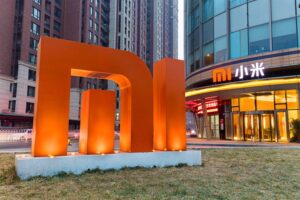
Xiaomi reported Q3 revenue that fell short of analyst expectations, while its adjusted net profit significantly surpassed forecasts. A key milestone was reached as its automotive and AI innovation businesses turned a profit for the first time in a single quarter. However, the company anticipates pressure on gross margins for both its smartphone and automotive segments in the coming year.
On November 18, Xiaomi Corporation (01810.HK) announced that its revenue for Q3 reached 113.121 billion yuan, a year-on-year increase of 22.3%, but lower than the LSEG analyst consensus estimate of 116.5 billion yuan. Adjusted net profit was 11.311 billion yuan, a year-on-year increase of 80.9%, exceeding analysts’ expectations of 10.3 billion yuan.
In the quarter, Xiaomi’s innovation businesses, including automobiles and AI, achieved profitability for the first time in a single quarter, generating operating income of 700 million yuan, compared to a loss of 500 million yuan in the previous quarter. Automotive revenue reached 28.3 billion yuan, a year-on-year increase of 191.8% and a quarter-on-quarter increase of 37.4%.
Xiaomi announced that it expects to achieve its full-year sales target of 350,000 vehicles within the week and anticipates further growth in delivery volume next year. In Q3, Xiaomi delivered 108,800 new vehicles, bringing cumulative deliveries for the first three quarters to 266,000 vehicles. This represents further growth compared to the 81,300 deliveries in Q2, with October alone seeing over 40,000 deliveries. For reference, among new automakers, only Li Auto has achieved annual sales exceeding 350,000 vehicles.
The average selling price (ASP) of Xiaomi vehicles also increased from 253,700 yuan in Q2 to 260,100 yuan in Q3, a quarter-on-quarter increase of 2.5%, primarily driven by deliveries of the SU7 Ultra.
In Q3, the gross profit margin for the automotive and AI innovation businesses was 25.5%, down 0.9 percentage points quarter-on-quarter. This margin is already among the top tier in the industry. Previously, the AITO brand, a collaboration between Huawei and Seres, was considered the benchmark for gross profit margin in China’s new energy vehicle sector, with a gross margin of 28.70% in Q4 of 2024 and a full-year gross margin of 26.15%. For comparison, BYD’s gross margin in 2024 was 19.44%, while Tesla’s automotive business gross margin was 18.4%.
Looking ahead to 2026, Lu Weibing described the situation as “very challenging,” as the purchase tax subsidy will be halved starting in 2026. Xiaomi has already taken countermeasures and expects its gross margin to decline next year. On October 24, Xiaomi announced a cross-year purchase tax subsidy plan. Customers who lock in orders before November 30 can receive a subsidy covering the cross-year purchase tax difference, with an upper limit of 15,000 yuan, applicable to all three current Xiaomi vehicle models.
Xiaomi’s automotive business has recently faced a “string of incidents.” On November 16, Xiaomi founder Lei Jun posted three consecutive Weibo messages emphasizing the SU7’s safety design philosophy. On October 13, Chengdu police released a report stating that a traffic accident lead to the death of the driver, who was suspected of drunk driving. Xiaomi said that the case involved a Xiaomi vehicle but has not yet provided any further response.
In Q3, revenue from Xiaomi’s smartphone business revenue decreased by 3.2% year-on-year to 46 billion yuan, accounting for 40.6% of total revenue, a decline in share. Global smartphone shipments reached 43.3 million units, a year-on-year increase of 4.6%, while the average selling price was 1,062.8 yuan, a year-on-year decrease of 3.6%. The financial report attributed this mainly to increased shipments in overseas markets and a decline in ASP, partially offset by a higher proportion of premium model shipments in the mainland market. The smartphone business gross margin was 11.1%, the lowest level in nearly two years.
At a media briefing, Lu admitted that smartphone memory costs have increased significantly, with next year’s pressure “far greater” than this year’s. He further revised down the annual smartphone shipment target from 175 million units to 170 million units.
Lu explained that this round of memory price increases is characterized by a longer cycle, primarily driven by demand from the AI industry, differing from previous cyclical fluctuations driven by the host industry. The last low point for memory prices occurred in 2023, and the new capacity formed at that time is expected to be released only in 2027, leading to a phase of supply-demand mismatch in the industry. Xiaomi has signed procurement agreements with major partners for 2026 to ensure stable supply throughout the year, Lu said.
Lu noted that rising memory costs will bring dual pressures: first, companies need to moderately increase product prices, but this will suppress the overall smartphone market size; second, some costs need to be absorbed by the manufacturers themselves, compressing gross margins. He emphasized that moving upmarket is Xiaomi’s main strategy for coping with industry cycles, as the absolute cost impact of memory price increases is the same for high-end and mid-to-low-end phones, but high-end phones have greater capacity to withstand the pressure.
According to data from market research firm Omdia, based on shipment volume, the top five global smartphone manufacturers in Q3 were Samsung, Apple, Xiaomi, Transsion, and Vivo, with market shares of 19%, 18%, 14%, 9%, and 9%, respectively. Compared to the same period last year, the only change was Transsion’s market share increasing by 1 percentage point. Global smartphone shipments in Q2 increased by 3% year-on-year to 320.1 million units.
Xiaomi’s major home appliance business showed a mixed performance. Revenue from the major home appliance business decreased by 15.7% year-on-year in Q3, mainly due to a decline in mainland shipments caused by the phase-out of national subsidies and intensified competition, partially offset by an increase in ASP driven by the premiumization strategy. Revenue from IoT and lifestyle consumer products, including major home appliances, was 27.6 billion yuan, a year-on-year increase of 5.6%.
On October 28, the first phase of Xiaomi’s Smart Home Appliance Factory was completed and put into operation, becoming Xiaomi’s third large-scale manufacturing base after the Automotive Super Factory and the Smartphone Smart Factory. According to Xiaomi, the factory covers an area of over 750 acres, with a total planned investment of over 2.5 billion yuan, a peak annual production capacity of 7 million units, and an estimated annual output value of 14 billion yuan. It will commence large-scale production of air conditioning products next year.
In May, Lu said that the self-research rate of components for major home appliances is continuously increasing, with the goal of reaching the top two in the industry by 2030. However, the market generally believes that it is challenging for Xiaomi to break into the top tier of the white goods industry (air conditioners, refrigerators, washing machines, etc.). White goods companies have a high degree of industrial chain integration, scale advantages form barriers, leading players hold discourse power, and the industry is highly concentrated. Additionally, channel flattening and insufficient profit sharing with distributors make it difficult for Xiaomi’s home appliance channels to penetrate lower-tier markets.