
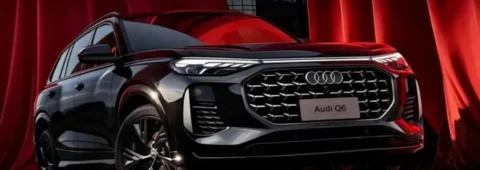
Audi’s deep price cuts in China reflect growing pressure facing the broader BBA luxury market. As discounts shift from hidden dealer negotiations to official price incentives, the trend is spreading from aging models to core vehicles such as the A6L, Q5L, C-Class, and GLC. For Audi, the pressure comes from both product transitions and strategic restructuring, as the brand balances its strong gasoline vehicle base with the need to accelerate intelligent and electric transformation. While price reductions can support short-term sales, the broader challenge for BBA is rebuilding pricing power and redefining luxury value in an increasingly competitive Chinese market.
Since 2026, the pricing power of Mercedes-Benz, BMW, and Audi in China has begun to erode. Competition is shifting away from opaque dealer-level discounts toward official price adjustments and publicly disclosed incentive programs. This wave of price cuts is increasingly affecting core models such as the Audi A6L, Q5L, Mercedes-Benz C-Class, and GLC — vehicles that have long served as luxury brands’ pillars.
At the beginning of the year, BMW China became the first among the three German luxury brands to adjust the suggested retail prices of 31 models. Five models saw price reductions exceeding 20%. In February, Mercedes-Benz followed by adjusting the suggested retail prices of major gasoline models including the C-Class, GLB, GLC and GLC Coupe, with reductions of around 10%.
Audi, which operates both FAW Audi and SAIC Audi joint ventures, has adopted the most aggressive price reductions.
At the beginning of July, SAIC Audi slashed the purchase thresholds for three of its four-ring gasoline models. The Audi A7L’s limited-time promotional price was cut to as low as RMB 299,000; the Audi Q6 was reduced to as low as RMB 299,000; and the recently launched Audi A5L Sportback was lowered to as low as RMB 259,900. Meanwhile, FAW Audi’s A6L saw transaction prices drop to as low as RMB 258,000 before taxes and fees.
Several SAIC Audi sales personnel told Y&T Intelligence that discounts on some models had reached RMB 150,000–160,000. “There is still room to negotiate.”
FAW Audi Clears Inventory for Model Replacement; SAIC Audi Prepares to “Change Tracks”
The two Audi joint ventures in China are pursuing distinctly different promotional strategies. FAW Audi is using substantial discounts on the A6L and Q5L to defend its traditional strongholds in the mainstream luxury sedan and SUV segments. SAIC Audi, by contrast, has placed three models — the A7L, Q6, and A5L Sportback — unde promotional campaigns while introducing “lifetime-valid” new-energy vehicle trade-in benefits to retain existing customers and create a pathway toward future electrification.
Multiple FAW Audi dealers disclosed that, under specific inventory conditions and corporate purchase arrangements with financing plans, certain 2026 A6L 40 TFSI entry-level models could be sold for as low as RMB 258,000.
The A6L remains one of Audi’s most important pillars in the Chinese market. Tracing its roots back to the domestically produced Audi 100 in 1988, the A6 product line has built a 38-year legacy in China and accumulated more than 3 million users. It has accompanied the transformation of China’s luxury vehicle market from government and official procurement toward private consumption and has long served as a benchmark for executive sedans, business mobility and premium transportation.
Despite approaching the end of its product lifecycle, the A6L continued to demonstrate strong market appeal, selling about 172,000 units in 2025 — an average of over 14,000 units per month — and once again securing its position as the best-selling model in China’s luxury mid-to-large sedan segment.
In March 2026, the new-generation A6L was launched with an official price range of RMB 322,900–435,900. Audi narrowed the gap between the official sticker price and actual market transaction levels, adopting a more realistic pricing strategy.
However, the A6L’s price falling into the RMB 200,000-plus range effectively resets the pricing benchmark for the entire luxury mid-to-large sedan segment. The Q5L is facing similar pressure. Public reports indicate that, in some regions, certain 2025 Q5L 40 TFSI models have reached prices of around RMB 240,000 under financing programs, about RMB 130,000 below the official suggested price of RMB 369,800.
The Q5 has also built a significant legacy in China. Since entering China 16 years ago, the model line has accumulated about 1.3 million units in sales. The second-generation locally produced Q5L, launched in 2018, has approached an eight-year product cycle. Despite its age, the Q5L remained a strong performer in 2025, selling around 140,000 units and maintaining a leading position in China’s luxury gasoline SUV market.
The A6L and Q5L, long regarded as benchmarks in the luxury vehicle market, now require discounts exceeding RMB 100,000 to accelerate inventory turnover. This shift highlights the significant erosion of the pricing cushion once enjoyed by luxury brands.
For SAIC Audi, the current promotions cover the A7L, Q6, and A5L Sportback. Among them, the A7L has an official price range of RMB 418,700–666,200, with a limited-time promotional price starting from RMB 299,000. The Q6 has an official price range of RMB 467,600–610,600, with the same promotional starting price of RMB 299,000. The A5L Sportback has an official price range of RMB 279,900–399,900, with the promotional price reduced to RMB 259,900.
Unlike FAW Audi’s A6L and Q5L, SAIC Audi’s A7L and Q6 are not yet approaching the end of their typical seven- to eight-year product lifespans. The A7L entered the market in 2021 and has been on sale for about five years, while the Q6 was launched in 2022 and has been available for less than four years. The A5L Sportback has been on the market for less than a year. The simultaneous promotion of all three models suggest that deeper factors are shaping SAIC Audi’s pricing strategy.
In 2025, SAIC Audi achieved retail sales of 47,258 units, up 23% year-on-year and marking its third consecutive year of growth. However, the scale gap with FAW Audi remains substantial: FAW Audi sold approximately 570,000 units during the same period. A single A6L model generated more than 3.6 times SAIC Audi’s total annual sales, while the Q5L alone came close to three times SAIC Audi’s full-year volume.
FAW Audi benefits from mature products such as the A6L, A4L, and Q5L, supported by an established sales foundation. SAIC Audi’s portfolio, including the A7L and Q6, is positioned around differentiation rather than volume. However, differentiation has not translated into sufficient scale.
The A7L was positioned as a “flagship coupe sedan” between the A6L and imported A7, but its sedan design created a perception gap versus the familiar A7 Sportback. The Q6 aimed to bridge luxury SUVs and large family six-seat SUVs but faced strong competition from new-energy brands such as AITO, Li Auto, and NIO. Consumers now evaluate luxury vehicles beyond size, engines, and badges, with increasing focus on intelligence, driver assistance, and ownership experience.
Under these circumstances, price cuts are not merely a tool to drive sales; they also represent SAIC Audi’s attempt to reposition its products and redefine their market appeal.
Notably, SAIC Audi’s current promotion includes a “lifetime-valid new-energy vehicle replacement benefit” for gasoline vehicle buyers, creating a pathway for existing four-ring customers to transition to future AUDI letter-logo new-energy products. Gasoline models help clear inventory, expand the customer base, and recover cash flow, while new-energy vehicles are positioned to drive future growth. The promotion therefore represents not only a pricing strategy but also a broader shift in product direction.
Recently, market reports suggest that Audi may further redefine the roles of its FAW and SAIC joint ventures: four-ring gasoline and electric vehicles could be concentrated under the FAW system, while SAIC Audi would focus on developing the AUDI brand with a letter logo.
This plan has not yet received official confirmation, but frontline sales personnel have not ruled it out. At the 2026 Beijing Auto Show, Audi’s China indicated a clearer division of responsibilities: the FAW partnership will focus on PPE-platform four-ring electric vehicles and established models such as the A6L and Q5L, while the SAIC partnership will concentrate on the AUDI brand and intelligent digital platforms.
Difficulties Behind BBA’s Collective Price Cuts
While Audi’s price reductions are driven by factors including product replacement cycles and internal restructuring, the broader BBA group faces similar structural challenges. Unlike previous promotions concentrated around seasonal slowdowns, year-end sales pushes, or model transitions, this round of BBA price cuts covers more models, lasts longer, and is shifting from dealer-level negotiations toward official pricing incentives that consumers can directly compare.
The first driver behind these changes is the decline in sales across the Chinese market. BMW delivered about 625,500 vehicles in China in 2025, down 12.5% year-on-year; Mercedes-Benz passenger vehicle sales totaled around 551,900 units, down 19%; and Audi deliveries in Mainland China and Hong Kong reached about 617,500 units, down 5%.
Entering 2026, the pressure has continued. In Q1, BMW’s China sales declined 10% year-on-year; Audi delivered 127,100 vehicles in China and Hong Kong, down 12%; and Mercedes-Benz recorded sales of 111,621 units, down 26.9%.
In the past, the Chinese market delivered both volume and profitability for BBA, supported by higher transaction prices, richer vehicle configurations, and strong joint venture returns. Today, it has become the most fiercely contested market for the three brands — and the one where maintaining premium pricing has become increasingly difficult.
The pressure is reflected in the companies’ financial results. In Q1 of 2026, Mercedes-Benz’s revenue fell 4.9% year-on-year to €31.602 billion, while net profit declined 17.2%. BMW’s revenue fell 8.1% to €31.007 billion, with net profit down 23.1%. Audi’s revenue declined about 8% to €14.178 billion, while net profit fell 11.2%.
BMW’s automotive business EBIT margin declined from 6.9% to 5% in Q1, while Mercedes-Benz Cars reported an adjusted return on sales of 4.1%. Although Audi’s operating margin improved from 3.5% to 4.2%, its financial contribution from China operations dropped from €170 million to just €28 million. These figures show that BBA’s challenge extends beyond simply “selling fewer vehicles.” Intensifying competition is now affecting transaction prices, product mix, joint venture returns, and overall profitability.
The second issue is dealer inventory and cash-flow pressure.
According to data from the China Automobile Dealers Association, the comprehensive inventory coefficient for automobile dealers reached 1.89 in April 2026, exceeding the warning threshold of 1.5. Although the figure declined to 1.63 in May, inventory pressure remained elevated, with high-end luxury and imported brands recording an inventory coefficient of 1.84. Audi was also among the mainstream brands with inventory levels exceeding two months during the period.
Under the traditional dealership model, dealers typically purchase vehicles from manufacturers upfront and recover capital through retail sales. Every additional day a vehicle remains unsold adds financing costs, storage expenses, and depreciation pressure. When manufacturer supply exceeds actual market demand, dealers’ priority shifts from maximizing per-vehicle profit to accelerating sales and recovering cash flow.
This is also why price inversions frequently occur in the luxury vehicle market. Dealer transaction prices may fall below acquisition costs, turning new vehicle sales into loss-making transactions. Dealers must then rely on manufacturer rebates, financing income, insurance commissions, and after-sales services to offset losses. Once one dealership cuts prices to accelerate cash recovery, competitors are often forced to follow to retain customers, eventually triggering regional price competition.
The third issue is that Chinese consumers’ definition of “luxury” has changed.
In the past, a vehicle with a prestigious brand, proven mechanical platform, premium interior, and strong business image could command a clear premium over mainstream brands. Today, consumers in the RMB 300,000–500,000 segment are placing greater emphasis on intelligent driving, smart cockpits, charging efficiency, rear-seat experience, and software capabilities.
BBA are no longer competing solely against one another; they are also facing growing competition from Chinese premium and new-energy brands such as AITO, Li Auto, NIO, Zeekr, Denza, Avatr, and Xiaomi.
Traditional luxury brands have historically built value around chassis engineering, mechanical excellence, and long-term quality, while Chinese new-energy brands emphasize visible technology, features, and user experience. The former often requires time behind the wheel to appreciate, whereas the latter can create an immediate impression within minutes of entering a showroom.
This does not mean mechanical quality has become irrelevant. Rather, consumers are increasingly unwilling to pay the same premium based solely on brand heritage and vehicle badges. When a product can no longer convincingly justify its value proposition, price cuts become the brand’s most visible form of explanation.
Audi is particularly vulnerable to price competition during this transition. Its sales remain heavily dependent on gasoline models such as the A6L, Q5L, and A4L, which require discounts to sustain volume, and its new-energy products have yet to achieve comparable market influence. Managing FAW Audi, SAIC Audi, four-ring electric vehicles, and the letter-logo AUDI brand simultaneously also adds complexity to product positioning and resource allocation.
Price reductions do offer tangible benefits. They can accelerate the clearance of outgoing models, free up channel resources for new products, and lower the entry barrier for consumers seeking a luxury brand. For budget-conscious buyers who still prefer gasoline vehicles, acquiring a proven A6L or Q5L in the RMB 200,000-plus range can be a compelling value proposition.
However, price cuts also carry significant costs. Rapid declines in new vehicle prices can undermine used-car valuations, while a prolonged gap between official list prices and actual transaction prices weakens consumer confidence in the brand’s pricing credibility.
Dealer networks are also under pressure. If dealerships increasingly depend on manufacturer rebates to remain profitable while absorbing losses on new vehicle sales, some may reduce investment or even exit the network if subsidies decline or sales targets are missed.
Even more concerning is the long-term impact on brand positioning. If consumers begin to associate the brand with permanent heavy discounts, a short-term competitive tool could become a lasting perception that is difficult to reverse.
Over the next two to three years, the key battle will be over which brands can rebuild the link between price and value. Traditional luxury automakers must accelerate advances in intelligent technology and localization, while Chinese premium new-energy brands must demonstrate that their quality, service networks, and residual values can withstand long-term market scrutiny.