
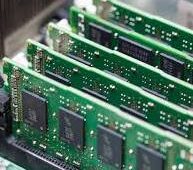
Surging demand for AI computing power is tightening global memory chip supply and pushing prices higher. Industry analysts expect the price increases for memory chips and downstream products to continue in Q1 and Q2 of this year.
On January 12, market research firm Counterpoint Research reported that the memory market has already surpassed its 2018 peak, with suppliers enjoying record-high bargaining power, and prices are expected to climb another 40–50% in Q1 of 2026, followed by an additional 20% increase in Q2.
Memory chips are widely used in servers, as well as in personal computers, smartphones, and other electronic products. Industry sources have suggested that the price of a 256GB DDR5 server memory module has exceeded 40,000 yuan per module, and if calculated as a box of 100 modules, the price of a box exceeds that of some properties in Shanghai.
Prices for laptop memory sticks have also risen significantly since Q4 of 2025. For example, Samsung Electronics’ 16GB DDR5 memory module was priced at more than 380 yuan on JD.com in September 2025, rose to 899 yuan in December 2025, and reached 1,399 yuan at the time of reporting.
A report by TrendForce indicated that the rise in memory chip prices is driving up the prices of downstream consumer electronics. End products face cost pressure, and it is expected that smartphones and personal computers will raise product prices and lower specifications.
In Q4 of 2025, the three major memory suppliers—Samsung Electronics, SK Hynix, and Micron—announced that their memory chip products for AI servers were already sold out for 2026. Since manufacturers are concentrating capacity on HBM (high-bandwidth memory) and DRAM (dynamic random-access memory), supply for electronic products will be limited.
Integrated circuit packaging and testing company Tongfu Microelectronics said in a recent announcement that AI large-model inference and the growth of intelligent edge computing are driving rapid demand for high-bandwidth, high-capacity, and high-reliability memory products, and meanwhile, traditional applications such as personal computers and smartphones are undergoing fast upgrades and structural improvements, further boosting memory prices.
Together, these factors have created a supply shortage in the memory market since 2025. Tongfu Microelectronics added that “domestic packaging and testing companies are facing a new demand window covering the entire memory chip product line,” it said.
Wang Xudong, senior analyst in the semiconductor division of Qunzhi Consulting, said that since 2025, memory manufacturers have gradually increased capital expenditures, expanding capacity through new factories, upgraded equipment, and revamped production lines.
“However, building factories and commissioning production lines for mass output takes time. Memory supply is expected to ease only in the second half of 2027,” he added. Wang noted that domestic manufacturers are actively investing in high-end memory technology R&D, while end-product companies are boosting their procurement of domestic memory devices, positioning local manufacturers to capture a larger market share.
Several listed companies have recently announced R&D and expansion plans. On January 12, Techshine Electronics announced that, through strategic investments in Numenory and Tianlianxin, it is building a vertically integrated full-chain operation spanning “memory chip R&D and manufacturing – controller chips and memory module R&D – memory module production – market commercialization.”
The company said that it aims to establish a complete memory ecosystem supporting AI computing from the foundational infrastructure to smart terminal applications.
JCET Group acquired Shenzhen Sendis Semiconductor in 2024, the latter mainly engaged in flash memory product R&D, packaging, and testing. In its investor relations activities on January 9, JCET said that Shenzhen Sendis Semiconductor’s factory operations further improved in the second half of 2025, and JCET and foreign shareholders continue to increase joint investment in the factory, focusing on new product technology iteration and capacity expansion. The company expects its memory business to maintain rapid growth for the year.
Tongfu Microelectronics recently announced plans to raise up to 4.4 billion yuan for project construction, including 800 million yuan dedicated to expanding memory chip packaging and testing capacity. Upon completion, the project is expected to add an annual packaging and testing capacity of 849,600 memory chips, enabling the company to scale production, optimize its product lineup, and strengthen its risk resilience.
The listing progress of two leading domestic memory chip companies has drawn market attention. On January 13, Gigadevice, a domestic memory chip leader, was listed on the Hong Kong Stock Exchange. On December 30, 2025, ChangXin Memory Technologies, a leading DRAM producer in China, officially submitted its prospectus to the Shanghai Stock Exchange, revealing plans to raise 29.5 billion yuan. The funds are earmarked for memory wafer production line upgrades (7.5 billion yuan), DRAM technology upgrades (13 billion yuan), and advanced DRAM R&D (9 billion yuan).