
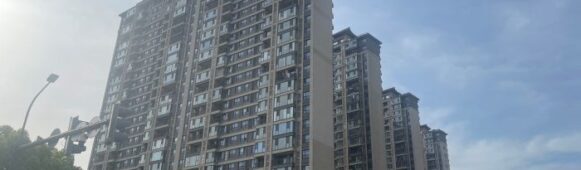
Across China, more than 20 provinces and cities have introduced housing purchase subsidy policies this year as local governments seek to stabilize the property market, reduce inventory pressure, and stimulate home demand. The latest round of measures marks a shift from broad-based incentives toward more targeted support, combining universal subsidies with customized packages for groups such as talent, families with multiple children, rural residents, veterans, and new city arrivals. “Trade-in” programs, which encourage homeowners to sell existing properties and purchase new ones, have become a central policy tool, with several cities offering cash subsidies or consumption vouchers.
Since the beginning of this year, more than 20 provinces and cities — including Guangdong, Hubei, Guizhou, Yunnan, Hainan’s Chengmai County, Lhasa in Tibet, Huai’an in Jiangsu, Jinjiang in Fujian, and Urumqi in Xinjiang — have introduced home purchase subsidy policies.
The biggest change is that, on top of the traditional universal “cash bonuses for everyone,” more targeted “customized packages” are now being directed toward specific groups.
“Trade-in” Becoming Main Theme of Universal Subsidies
Different regions have adopted widely varying housing subsidy rules. Jinjiang, Fujian Province, recently introduced a new round of home purchase subsidy policies, adopting a “phased and floor-area-based” subsidy structure.
During the first phase (July 10 – to October 31, 2026), buyers of newly built housing of 140 square meters or less (including 140 square meters) will receive a subsidy of 50,000 yuan per unit, while homes larger than 140 square meters will receive a subsidy of 30,000 yuan per unit. During the second phase (November 1 – February 28, 2027), the subsidy standards will be reduced to 30,000 yuan and 10,000 yuan respectively. Families with multiple children can receive additional subsidies.
“Trade-in” has become a recurring theme in this year’s local housing policies. For example, Guangzhou has adopted a framework combining “city-level universal subsidies + district-level additional subsidies.” In May, the city introduced special subsidies for residents who “sell their old homes and purchase new ones.” Each household is eligible for a maximum subsidy of 30,000 yuan, with a total subsidy pool of 200 million yuan available until funds are depleted.
At the same time, districts such as Nansha and Huadu in Guangzhou have introduced their own district-level subsidies, providing additional support of up to 20,000 yuan. On July 13, the Guangzhou Housing and Urban-Rural Development Bureau released the first list of recipients for the “sell old, buy new” special subsidies, indicating that the policy has moved into the payout phase.
Yunnan has adopted a “consumption voucher” model. On July 9, the Yunnan Provincial Department of Housing and Urban-Rural Development issued the Announcement on Subsidies for Purchasing Newly Built Commercial Housing in Yunnan Province in Q3 of 2026.” Under the program, buyers of newly built housing will receive tiered subsidies of 5,000 yuan, 10,000 yuan, or 15,000 yuan per unit.
Guangdong’s Zhongshan has also adopted a consumption voucher approach to support “trade-in” purchases. It announced that from now until December 31, 2026, residents who “sell an old home and buy a new one” within the city will receive a 10,000-yuan housing consumption voucher for each unit. The sale of the old property and the purchase of the new home do not need to occur in a fixed sequence. Meanwhile, Shenzhen’s Nanshan District has taken the lead in launching the city’s first property “trade-in” consumption voucher, offering subsidies of up to 50,000 yuan per unit.
While Jiangsu’s Huai’an offers buyers of newly built housing a subsidy equivalent to 2% of the total purchase price, it places “new arrivals to Huai’an” and “trade-in buyers” into the same higher subsidy category, granting them a subsidy of 3% of the purchase price. This detail also highlights the local government’s intention to attract population inflows.
Large “Customized Packages” for Specific Groups
The biggest beneficiaries of these “customized packages” remain high-level talent groups.
For example, Guangzhou’s Huangpu District has introduced a talent housing voucher subsidy program. Eligible bachelor’s degree holders (or senior technicians), master’s degree holders (or those with associate senior professional titles or special-grade technician qualifications), PhD holders (or those with senior professional titles or chief technician qualifications), and postdoctoral researchers who join Huangpu District within one year after completing their postdoctoral work will receive subsidies of 100,000 yuan, 150,000 yuan, 250,000 yuan, and 300,000 yuan, respectively.
The subsidized housing includes 34 residential projects currently available for sale. Many three-bedroom, one-living-room units are priced at around 3 million yuan. With the maximum subsidy of 300,000 yuan, the effective purchase price would represent a 10% reduction, equivalent to paying about 90% of the original price.
Lhasa recently introduced the “Implementation Rules for Promoting Housing Consumption and Optimizing the Adjustment of New Commercial Housing Purchase Subsidies in Lhasa.” The policy establishes a system combining “region-based basic subsidies + citywide special subsidies for university graduates.” While helping alleviate real estate inventory pressures, it also strengthens housing support for local talent.
Taking Lhasa’s Dulongdeqing District, Lhasa High-Tech Zone (Liuwu New District), and Dazi District as examples, the maximum basic subsidy for a single housing unit is 100,000 yuan. When combined with the special subsidy for university graduates — including an additional 60,000 yuan per unit for PhD graduates — the total subsidy for a single home in these three districts can reach up to 160,000 yuan.
Jingzhou in Hubei provides subsidies of 100,000 yuan for PhD graduates and 50,000 yuan for full-time master’s degree holders purchasing newly built housing. Rural household registration holders receive 30,000 yuan, veterans receive 30,000 yuan, families with two children receive 30,000 yuan, and families with three children receive 60,000 yuan. The breadth of eligible groups is relatively wide compared with similar cities.
Yan Yuejin, deputy director of the Shanghai E-house Real Estate Research Institute, said that recent housing subsidy policies have become more refined and systematic, showing several major characteristics:
First, subsidy recipients are being targeted with greater precision, with policies shifting from purely “universal benefits” toward a combination of “universal benefits + support for specific groups.” Second, subsidy methods have become increasingly diversified, including fixed-amount subsidies, subsidies based on a percentage of the home purchase price, consumption vouchers, and other forms of assistance. Third, these policies are becoming more closely aligned with local development strategies, aiming to achieve the dual objectives of stabilizing the property market and attracting talent.
“Subsidies are no longer isolated and simple promotional tools. They are increasingly being combined with broader factors such as local fiscal capacity, demographic changes, and industrial talent needs,” he said.
However, he also warned that as these policies expand on a large scale, local governments need to pay attention to three issues going forward:
First, the issue of diminishing marginal effectiveness of subsidy policies and how to assess their actual conversion rates. Second, the need to improve coordination between “trade-in” measures — such as deed tax subsidies and personal income tax rebates — and housing purchase subsidies. Third, as policy tools continue to evolve, whether more cities will explore innovative subsidy models that integrate housing subsidies with urban renewal initiatives and the acquisition of affordable housing.
“Looking ahead, the current market still has strong resilience and self-adjustment capabilities. Local governments should further communicate the progress of the property market recovery, while actively combining high-quality locations and cost-effective housing options with existing policies to promote more active market transactions,” he said.