
Executive Summary
While many Chinese automakers continue aggressive price cuts to gain market share, Chery’s Exeed brand has bucked the trend, raising the official price of its ET5 model by up to 5,000 yuan. The move reflects both a long-term strategic focus—prioritizing high-quality development, technology, and user experience over short-term “price wars”—and the rising costs of critical inputs, particularly memory chips and lithium for power batteries. With global supply chain pressures intensified by AI-driven memory demand and soaring raw material prices, Chery aims to sustain R&D investment, uphold product quality, and deliver reliable service, signaling a broader shift toward value-driven competition in the automotive sector.
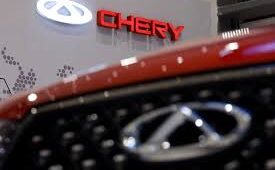
On March 5, Chery Automobile’s Exeed brand announced an increase in the official guide price of the Exeed ET5, with the high-end 210 LiDAR Zhizun version rising by 5,000 yuan, bringing the official guide price to 164,900 yuan.
In contrast, just after the Spring Festival holiday, some joint-venture brands launched a new round of price wars. For example, the Accord e:PHEV dropped 100,000 yuan; SAIC Audi E5 Sportback released a limited-time 30,000 yuan gift package, with a post-benefit starting price of only 205,900 yuan. In addition, more than 20 automakers have successively released “seven-year low-interest loans” financial policies in an attempt to capture more market share.
Regarding this counter-trend price increase, Exeed said that while factors such as rising chip costs contributed, the adjustment mainly reflects the brand’s proactive, long-term strategy, and the price change is intended to secure sustainable investment in R&D, maintain product quality, and enhance user services, ultimately delivering a reliable, high-value experience for customers.
“We are committed to resisting ‘involution-style competition’ and pursuing high-quality development. Chery does not engage in low-level ‘price wars’; instead, we aim to drive growth through technology and management, elevate product quality, move out of the ‘internal competition zone,’ and enter the ‘profit zone,’” said Yin Tongyue, Chairman of Chery Automobile.
A staff member from a joint-venture brand added, “We have always promoted a value-driven approach rather than focusing on price. By shifting the core of competition from ‘price wars’ to ‘technology,’ ‘features,’ and ‘user experience,’ the automotive market can develop in a healthier and more sustainable way.”
The price increase of the Exeed ET5 is driven not only by strategic considerations but also by tangible pressure of rising global supply chain costs.
The surge in memory chip prices has been ongoing for some time. According to a memory industry survey by TrendForce, in Q1 of this year, the quarterly contract price increase for conventional DRAM (dynamic random-access memory) is expected to climb from 55%–60% in early January to 90%–95%, and meanwhile, NAND Flash (non-volatile memory) contract prices are projected to rise from 33%–38% to 55%–60%, with further increases still possible.
Unlike the “chip shortage” of 2021, the current situation reflects a “resource competition” between the automotive and AI industries. Following the AI technology boom, demand for high-bandwidth memory (HBM) in data centers has surged exponentially, and this supply-demand imbalance has extended to consumer electronics and other end products, driving up prices across the board.
“This year, the automotive industry is under significant cost pressure, with rising memory chip prices posing the greatest challenge—not raw materials. Our Dimensity chips, NVIDIA chips, and cockpit chips all rely on memory chips, and automakers cannot compete with AI and high-performance computing centers, whose investments reach tens of billions of dollars. As a result, vehicles equipped with standard intelligent driving systems and smart cockpits will face notable cost-control challenges,” said Li Bin, chairman and CEO of NIO, in an interview in early January.
Lei Jun, chairman of Xiaomi, also noted during a January livestream, “Memory prices are rising every quarter. Last quarter, they increased by 40%–50%, and this quarter they are expected to climb even further. At this pace, memory costs for vehicles alone could rise by several thousand yuan this year.”
Beyond chips, power batteries are also facing significant cost pressures. The key raw material, battery-grade lithium carbonate, surged from approximately 75,000 yuan per ton at the start of 2025 to 171,900 yuan per ton by March 2026.
According to a UBS report, the forecasted price of lithium carbonate has been revised to 26,000 USD per ton (approximately 185,000 yuan per ton). The report also projects that global lithium demand will double to 3.4 million tons by 2030, with demand expected to grow 14% in 2026 and accelerate further to 16% in 2027.
Cui Dongshu, secretary-general of the China Passenger Car Association, stated, “The global AI-driven surge in energy storage demand, coupled with the sharp rise in prices of non-ferrous metals like copper, has significantly increased cost pressures on automakers. With new energy vehicle sales growing continuously for over two years, the soaring prices of resources such as lithium carbonate have intensified bargaining across the entire supply chain.”